How long does SEO actually take to work?
Honest timelines for local and organic SEO, what actually drives them, and the early signals that tell you it is working long before the rankings move, from an agency that turns down clients wanting overnight results.
It is the first question almost everyone asks, and it is a fair one. You are about to put time and money into SEO, and you want to know when it pays off. The honest answer is that it takes months, not weeks, and anyone who gives you a confident date is guessing or selling. But "months" is not good enough to plan around, so here is the real picture: how long it usually takes, what makes it faster or slower, and how to tell it is working before your rankings actually move.
We would rather set this expectation clearly up front than win the work by promising something we cannot deliver. SEO is one of the best investments a local business can make, precisely because it compounds and it is hard for a competitor to buy their way past overnight. That same durability is why it takes a while to build.
The honest ranges
For most local businesses, here is what a realistic timeline looks like.
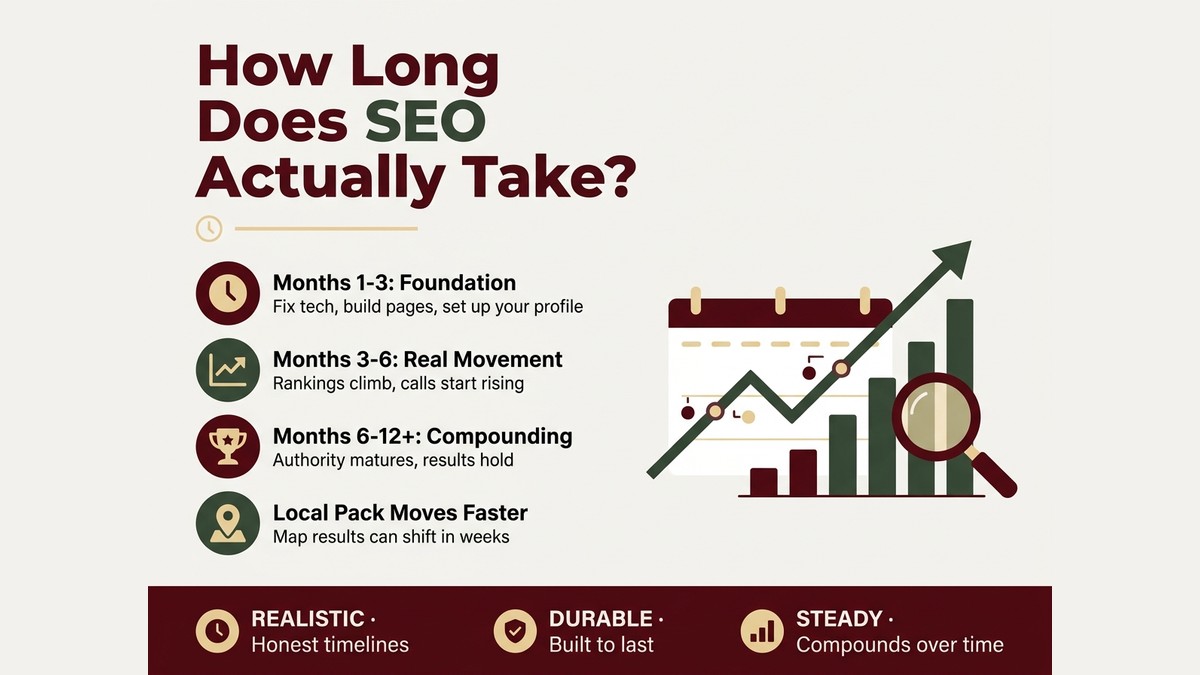
In the first one to three months, the work is foundational and the movement is mostly under the surface. We fix the technical issues, sort out the site structure, build or improve the pages that matter, clean up your Google Business Profile and citations, and start earning reviews. You will usually see early signals here, but not big ranking jumps.
Between three and six months is when most businesses start to see real movement: climbing for the terms you are targeting, more of your pages getting indexed and ranking, and a noticeable lift in traffic and calls. This is the point where the earlier work starts to show up as results you can feel.
From six to twelve months and beyond is where SEO earns its reputation. Rankings for competitive terms mature, your authority builds, and the traffic becomes steady rather than spiky. The gains from this stage also tend to hold, because they are built on real content, real reviews, and real links rather than a trick that stops working.
These are ranges, not promises. Your own timeline depends on the factors below, and a good agency will tell you honestly where you sit before you sign anything.
Local pack and organic move at different speeds
One thing that confuses people is that "SEO" is really two races running at once, and they do not move at the same pace.
The local pack, the map with three businesses that shows up for "near me" searches, can move relatively quickly. Because it leans heavily on your Google Business Profile, your reviews, and your proximity to the searcher, focused work there can show results in a matter of weeks to a couple of months. If local visibility is your goal, this is often the faster win, and it is worth understanding how the local pack actually ranks businesses.
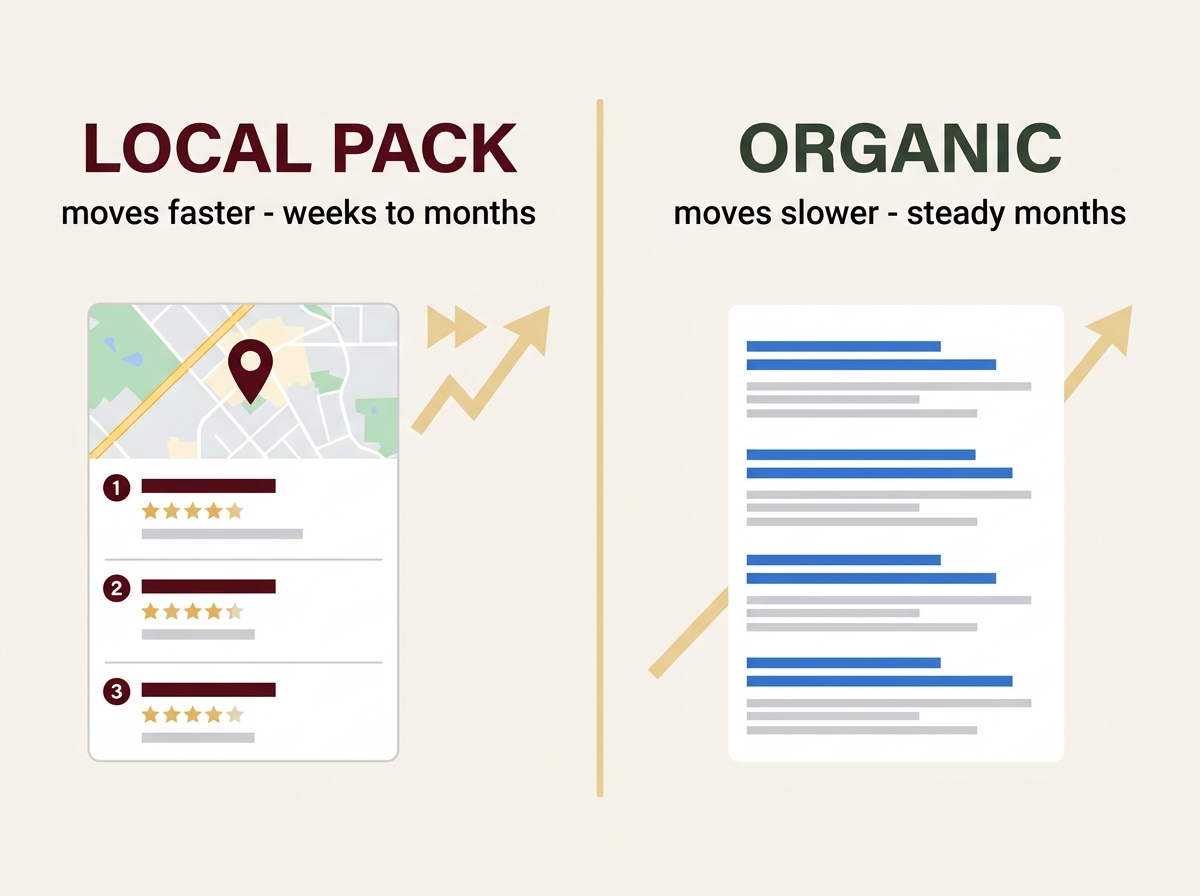
Classic organic rankings, the standard blue links below the map, tend to move more slowly. They depend more on the overall authority of your site, the depth of your content, and the links pointing to you, all of which take longer to build. So it is normal to see your map presence improve months before your organic pages catch up.
What actually drives your timeline
Two businesses can start SEO on the same day and get results months apart. A few things explain the gap.
Competition. The single biggest factor. If you are a dentist in a small town, you can rank quickly. If you are a dentist in downtown Toronto competing against dozens of established practices, it takes longer and costs more, because you are trying to outrank sites that have a head start of years.
Your site's starting point. A brand new domain with no history and no links has to earn Google's trust from zero, which takes time. An older site with existing authority has a foundation to build on. If your site also has technical problems or thin content, some of the early months go into fixing the floor before you can build up.
Backlinks and reputation. Links from other reputable sites, and for local businesses, consistent citations and a steady flow of reviews, are a large part of how Google decides who to trust. These are earned gradually. You cannot safely shortcut them, and the attempts to do so tend to backfire.
How much and how consistently the work gets done. SEO is not a one-time setup. The businesses that win are the ones where the content, the reviews, and the local presence keep getting attention month after month. Stop-start effort gets stop-start results.
The signs it is working, before the rankings move
Waiting three months for a number to change is nerve-wracking if you do not know what to look for. The good news is that progress shows up in leading indicators well before your main keywords climb, and these are what we watch to know we are on track.
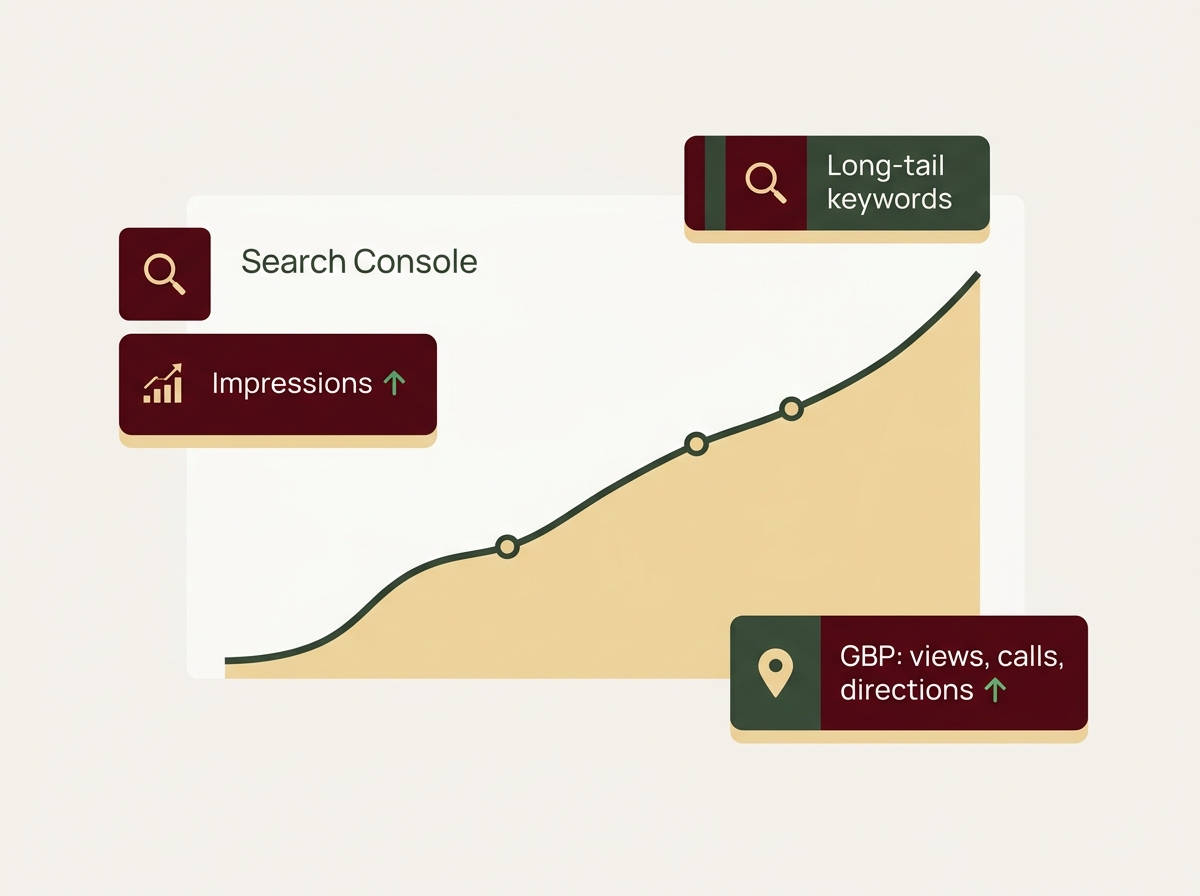
You will usually see impressions rise first, meaning your pages are showing up in more searches even if they are not yet near the top. You will start ranking for longer, more specific phrases before the short competitive ones. On the local side, your Google Business Profile insights will show more views, more calls, and more direction requests. And your newer pages will get indexed and start picking up the occasional click. None of these are the finish line, but together they tell you the foundation is taking hold and the rankings are likely to follow.
If months go by with no movement in any of these, that is a real signal that something needs to change, and an honest agency will flag it rather than keep quietly billing.
Why it cannot be instant, and why that is a good thing
It helps to understand why SEO takes time, because it makes the wait make sense. Google has to crawl and index your pages, then watch how people interact with them before deciding how much to trust them. Authority is built on signals that accumulate slowly, like content that proves useful over time, links earned from other sites, and reviews that arrive at a natural pace. There is no button that makes Google trust a site overnight, by design, because that is exactly what would let spammers win.
The upside is that the same slowness protects you once you are ahead. A competitor cannot simply outspend you next month to erase a year of earned authority. The results you build are durable in a way that paid ads, which stop the moment you stop paying, never are.
The 30-day promise, and other red flags
If someone guarantees you page one in 30 days, guarantees a specific ranking at all, or will not explain what they actually do, be careful. Rankings are not Google's to sell and not an agency's to promise, so a guarantee is either meaningless or a sign that risky tactics are on the table, the kind that can get your site penalised and cost you far more than the time you were trying to save. Anyone promising a brand new site organic leads in 30 days is selling something. The honest version sounds less exciting and works far better: a clear plan, realistic ranges, and steady reporting on the signals above.
What honestly speeds things up
You cannot rush trust, but you can avoid wasting months. Fixing the technical foundation and site structure early means the later work actually counts. Targeting keywords you can realistically win first, then moving up to the competitive ones, gets you traffic sooner than chasing the hardest terms from day one. For local businesses, a consistent flow of genuine Google reviews is one of the fastest levers you have. And doing the work consistently, rather than in bursts, is the quiet thing that separates the businesses that get there from the ones that give up at month two.
Do it yourself, or hand it off
A patient owner with time can do a lot of this: fix the obvious technical issues, build out the pages your customers actually search for, keep the Google Business Profile current, and ask every happy customer for a review. If you stay consistent, you will make progress.
It is worth bringing someone in when the competition is serious, when you want your SEO and local presence built and maintained properly rather than in fits and starts, or when you simply want it handled so it does not fall off your plate the moment you get busy. Either way, the thing to hold onto is this: real SEO takes months, it shows up in the signals before the rankings, and it lasts. If you want a straight answer about how long it would take in your specific market, tell us what you are dealing with and the first call costs nothing. You can also see how we work before you ever get on a call.