How to get more Google reviews for your local business
The practical playbook for a steady flow of real Google reviews, the kind that lift you in the map and win the next customer, from an agency that runs local search across the GTA.
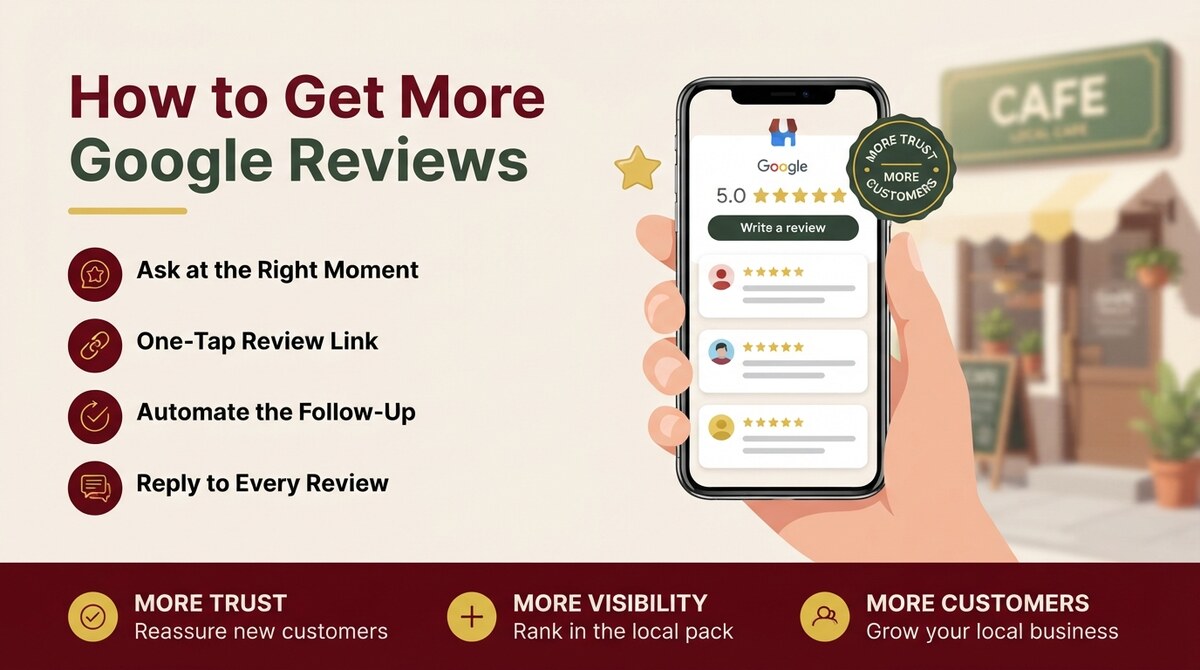
Ask a busy business owner why they do not have more Google reviews, and the answer is almost never "I do not want them." It is that no one is asking, or someone asks now and then when they remember, and there is no system behind it. Meanwhile the competitor down the road with a steady stream of recent reviews quietly takes the customers who were deciding between you.
Reviews are worth the effort because they do two jobs at once. They feed prominence, which is one of the few things you can actually move in your Google Maps ranking, and they are the thing a hesitant customer reads before they buy. The same review that helps you show up also helps you win the sale. This is the practical playbook we use for local businesses across the GTA to turn reviews from an occasional afterthought into a habit, without breaking any rules or making it weird.
Make leaving a review a single tap
The biggest reason people do not leave a review is friction. They meant to, they got busy, and finding your business on Google and tapping through to write something felt like a chore. Your whole job is to remove that friction.
Google gives every Business Profile a direct review link that opens the review box in one tap. Get yours from your Google Business Profile, shorten it if you like, and then put it everywhere the moment matters: in the follow-up text or email after a purchase or appointment, on a small card at the counter, as a QR code by the till or in the waiting area, on the receipt, and on your website. A customer who taps a link and sees the star box is far more likely to finish than one who has to go hunting. If the ask takes more than a few seconds, most people will not do it.
Ask at the right moment, and make it human
Timing beats volume. The best moment to ask is right after something good happened: the job was finished well, the meal landed, the problem got solved, or the customer told you they are happy. That is when the goodwill is real and a review writes itself.
Who asks matters too. A quick, sincere line from the person who served them works far better than a cold automated blast alone. Something as simple as "if you have a minute, a quick Google review really helps our small business" is enough. People help businesses they like when you make it easy and you actually ask. The mistake is waiting for reviews to happen on their own. They mostly do not.
Automate the reminder, without becoming spam
Asking in person is best, but people forget the moment they walk out the door. A light, automated follow-up is what turns a good intention into a posted review. A single text or email a few hours after the visit, with a friendly note and the direct review link, will lift your review rate more than anything else you do.
This is where a simple bit of CRM and automation earns its keep: the message sends itself after each completed job or appointment, so nothing depends on anyone remembering. Two rules keep it from becoming spam. Send one reminder, not five. And do not blast your entire customer list at once, because a pile of reviews landing in the same week looks unnatural to both Google and to the people reading them. Steady and recent beats a sudden flood.
Do not gate, buy, or fake reviews
There are shortcuts here, and every one of them will eventually cost you more than it gives.
Review gating, where you survey people first and only send the happy ones to Google while steering the unhappy ones elsewhere, is against Google's policy and increasingly detectable. Ask everyone, or no one. Buying reviews or having staff write them is a guideline violation, it is corrosive to the trust that makes reviews work, and Google has gotten steadily better at spotting the patterns. Offering a discount or a draw in exchange for a review is also against the rules and is exactly the kind of thing a competitor will report. The only reviews worth having are real ones from real customers, gathered by asking well and often.
Reply to every review, and keep it professional
Replying is not optional, and it is the part most businesses skip. Future customers read your replies more closely than the reviews themselves, because your replies show them how you treat people. A short, warm thank-you on a good review, and a calm, professional response on a difficult one, does more for the reader than the star rating does.
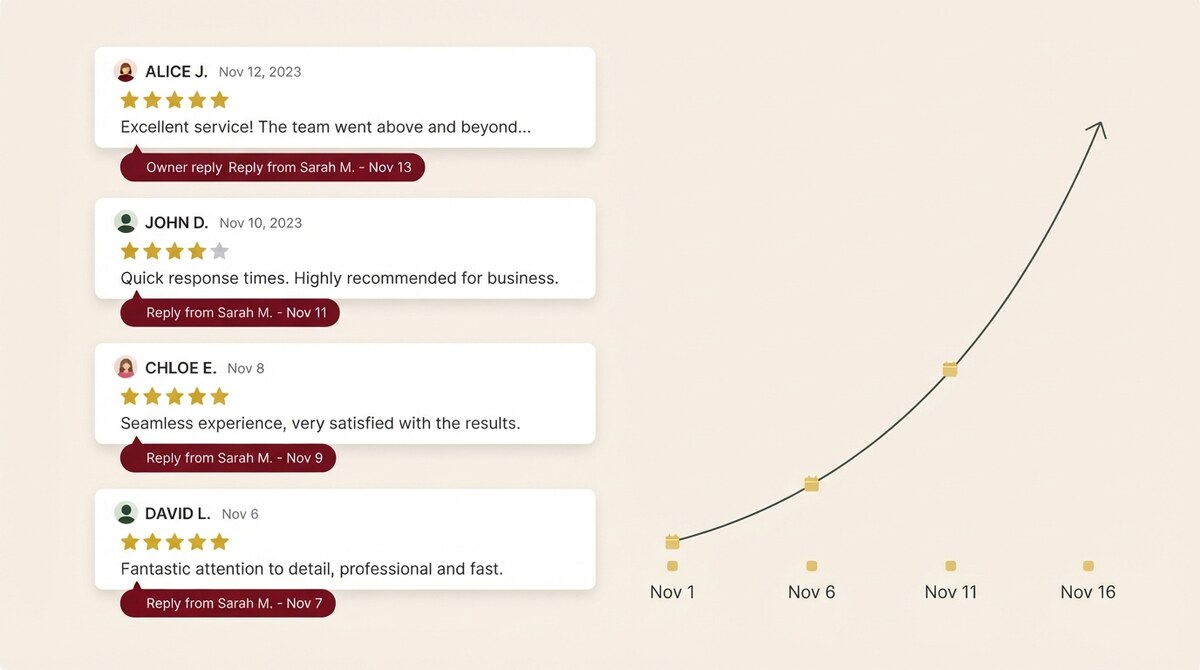
One rule keeps replies out of trouble: do not share private customer details in public, even to defend yourself, and even if the reviewer shared them first. Keep the public reply general and take the specifics to a private channel. A safe reply to a hard review sounds like "We are sorry to hear about your experience. We take this seriously and would like to make it right. Please reach out to us directly at [phone] so we can help." You have shown you care, and you have said nothing you should not.
If you are in a regulated profession, check the rules first
If your work is governed by a professional body, in health, law, finance, real estate, and others, there may be advertising and testimonial standards that shape how you can solicit and use reviews. This is not a reason to avoid reviews, it is a reason to know your lane before you scale the ask. A quick check of your regulator's guidance up front saves trouble later, because it is your licence on the line, not your marketer's.
Handle the negative ones like a professional
You will get a bad review eventually, and it is not the disaster it feels like. A single thoughtful reply to a negative review, sitting among a steady stream of genuine positive ones, often reassures a reader more than a suspiciously perfect five-star wall. Respond calmly and quickly, do not argue, do not get defensive, and move the specifics to a private channel. What you never do is retaliate or expose private information to win a public argument. Handled well, one difficult review makes all the others look more believable.
Keep it steady, because consistency is the whole game
A business that asks every happy customer and replies to everyone will, within a few months, pull ahead of a competitor who did a big push once and stopped. Reviews compound. The recent, steady flow is what Google rewards and what customers trust, and it is also the first thing to slip when work gets busy. The businesses that win the local pack are usually just the ones that kept it up long after everyone else lost interest.
Do it yourself, or hand it off
Most of this a motivated team can run: grab your review link, put it everywhere, ask at the right moment, set up one automated reminder, reply to everything, and never gate or buy. If that happens consistently, you will not need anyone.
It is worth bringing someone in when you want the reminder automation built and connected to your booking or point-of-sale system, when you are in a competitive market and need reviews plus the rest of your local presence working together, or, most honestly, when you know the asking will not stay consistent once you are busy. That is the part we make automatic. If you would like reviews handled properly alongside your local search, tell us what you are dealing with and the first call costs nothing.